Up until the '60s, the Japanese followed the shinto-style wedding ceremony, with the groom and bride wearing traditional kimonos.
Then starting in the late '60s, De Beers introduced the idea of the diamond ring as an engagement gift, a romantic ritual practiced in the west. The campaign was so successful that within a generation most Japanese adopted this costume and Japan soon became the second-largest diamond market in the world, only after the US. In the present days many couples, while still preserving the shinto ceremony, have adopted the western ceremony as well, white wedding dresses and all.
The Japanese baby-boom generation however is starting to retire this year, and in a society that is getting increasingly old, marketers have to redirect the focus of their activities. It's therefore time for another ritual to be promoted.
There's currently a campaign called "Thanks Days", starring musician and actor Akira Terao (most people outside Japan will recognize him from his role in Kurosawa's Ran), depicting a salaryman who is retiring from work. The commercial starts when he gets the flower bouquet from colleagues (a tradition for retiring people here). He then goes home, in a reflective mood, and all the while we listen to his thoughts (roughly translated):
For only thinking about work, forgive me...
For the days I got home drunk, forgive me...
For that time I lied, forgive me...
For everything...forgive me...
When he gets home his wife is preparing dinner and waiting for him. He gives her the flowers. Then, to her surprise, he produces a small box from his pocket, places it in her hands, and sheepishly looking away, says a short "thank you".
See the sequence below. You can watch the entire commercial here (click on the second link from the right).


 Romantic movies usually have two types of ending. They either end in tragedy (one of the lovebirds die, sometimes both of them) or in happiness, when the couple finally meets at the end. In the latter case, the end marks their reunion but it is also the promise of a new beginning, in which they'll live happily ever after.
Well, the "Thanks Days" commercial catches this particular couple after they've been through their "happily ever after" years, revealing to us that perhaps they were not so happy after all.
This shouldn't be a surprise at all (as any couple would attest), but the problems are magnified especially considering the well-documented burden Japanese workers have to endure (presenteeism, long working hours, late-night drinking binges with co-workers).
But nothing is lost, people shouldn't despair. There's a renewed hope now.
The commercial shows that the husband, after more than 30 years of devotion to work (evidenced by the inscription "12075 days" in the internal part of the ring), is willing to start a new life.
As they celebrate over dinner, the voice-over says "propose again".
And finally, the wife toasts to a new start, a new hope, "korekara mo yoroshiku" (a bit hard to translate, but in a romantic way, it could be "from now on, let's take care of each other").
What remains to be seen, as millions of Japanese wives prepare to have their husbands at home again, is whether they'll really get their platinum rings or not.
And more importantly perhaps, will the couple live happily ever after this time around?
Saturday, September 15, 2007
a ring for a fresh start

Wednesday, May 23, 2007
the mao suit
This is slightly embarrassing to admit but when I went to Beijing a couple of years ago, I was expecting to see everybody in Mao suits, the traditional communist outfit (O.K., you can laugh at me now). It wasn't utter ignorance (at least that's what I like to think). I had read all about the economic boom there, and had seen many TV reports as well, but despite all this I still had the image of the old communist country in my mind. Tell about the power of a symbol. Or was it because Bertolucci's "The Last Emperor"? Well, maybe both. Either way, all I can say is 'boy, was I wrong!'. Modern skyscrapers, malls, fashionable people everywhere, and most of all the stark contrast of BMWs and Mercs side by side with thousands of bike riders, that's what struck me the most. Not a single person wearing a Mao suit though.
According to this great article about the symbolism of old Chinese communist outfits, "...popular mythology assigned a revolutionary and patriotic significance to the Sun Yat-sen (the suit's designer) suit, even though it was essentially a foreign-style garment. The four pockets were said to represent the Four Cardinal Principles cited in the classic Book of changes and understood by the Chinese as fundamental principles of conduct: propriety, justice, honesty, and a sense of shame. The five centre-front buttons were said to represent the five powers of the constitution of the Republic and the three cuff-buttons to symbolise the Three Principles of the People: nationalism, democracy, and people's livelihood".
Like Che t-shirts and Adidas CCCP Originals however, the Mao suit is no longer a symbol of the communist revolution, it has become a design icon, as demonstrated by the work of Chinese artist Sui Jianguo. See below this series of bright colored Mao suits. More of this artist's work here.
(via "I see what you mean". By the way, doesn't it sound like a cousin of "Just Trying to Understand"? Funny.)
Tuesday, May 08, 2007
you say "ouch", i say...
I've always been amused by how people in different countries express pain differently. It's not a sadistic trace of mine, just curious observation.
I was used to scream "ai!" back in Sao Paulo. Now that I live in Singapore, I alternate between "ouch" and "ai". I haven't noticed exactly when I use one or the other, I guess it depends on the occasion or type of pain (still have to do more "research" on this, but am kind of reluctant to do so).
I find it fascinating that even this apparently instinctive reaction is actually culturally molded.
I found this great story on NPR, "Ouch! The language of pain", where they set out to hear people from different cultures and how they express pain. You can listen to it here.
Tuesday, April 03, 2007
periodic table of blondness
 Another quick note on the latest Monocle.
The "periodic table of blondness" (pages 110-111), about the increasing similarities of TV news anchors (they always tint their hair lighter, never darker), was based on a Slate article written by Jack Shafer, which in turn, was based on Grant McCracken's "Big Hair: A Journey Into The Transformation of Self". Mr. Shafer borrowed the book's different portraits of blondes to rank TV anchors: bombshell blonde (Laurie Dhue of Fox); sunny blonde (Katie Couric of CBS); brassy blonde (Fox's E D Hill); dangerous blonde (CNN's Nancy Grace); society blonde (Fox's Janice Dean); and cool blonde (CNN's resident populist republican, Lou Dobbs). Mr. McCracken seems to be everywhere these days. No wonder, he's excellent.
Monday, April 02, 2007
diderot and the cute nissan pino
Grant McCracken, in his book “Culture and Consumption”, recalls an essay by French philosopher Francis Diderot. In his essay, “On Partying with my Old Dressing Gown”, Diderot described the transformation caused in his life by a beautiful new dressing gown he received as a gift. He loved the gift, but soon thereafter however, he notices that, compared to the new gown, the decoration in his room, the rug, the curtains, the desk, all looked shabby. He proceeds to replace them one by one, so that they match the new gown. McCracken describes this process as the “Diderot effect”, the way people create a lifestyle by trying to find cultural consistency in the things they buy, so that they “match”.
I just mention this idea because I came across the new Nissan Pino, recently launched (last January) in Japan, targeted at young women. Looking it as it is, it seems like just another small car. However, a visit to Pino’s website quickly tells a different story. To start with, you're welcomed by this "lovely loading" sign.
 Then you get it. Pino is a kawaii (cute) car. But the interesting thing about the Pino is not the car in itself, but how the cuteness meaning is created. Look at the picture below.
 The car is not the center of the action. It’s more of a complement to the whole scene. And it’s the surrounding, with all its cuteness, that "contaminates" the car with meaning. Normally, as Wired’s Mark Durhan well noted, “...using cutesey fluffy pinkness to sell cars to 20-year-old women would be beyond the pale - too narrow, too sexist, too ludicrous. Not so in Japan”.
The Pino, much as Diderot’s gown, helps the girls define a lifestyle. Like Diderot’s gown, it’s not the only item, but a complementary object that, along with her keitai (mobile), her favorite pair of jeans, her pair of sneakers, her handbag, her nail polisher, and all her other possessions (all “lovely” of course, see below), creates her lifestyle and will accompany her “365 days a year, 24 hours a day”. And then comes the fun part, accessories. Girls can choose a heart-shaped cushion, a stuffed dog called “Pino Dog”, a flower-patterned upholstery, and a dozen other matching items, to help them create the desired effect.
 Accessorizing and personalization are not new ideas, but I hardly remember seeing them so tightly-knit behind the creation of specific lifestyles.
And if you thought the concept of “cuteness” defined only one lifestyle, you haven’t really started in this world. Pino’s campaign shows a group of three fashionable friends who strut around their different "cute styles".  They portray three different types of cuteness: the “feminine cute” Yumi-chan, who is a model and loves dancing and snowboarding;...
 ...the “casual cute” Kimi-chan who wears a pair of jeans shorts and practices yoga;...
 ...and the “beautiful cute” Tamami-chan, who wears a plaid skirt and is into classic ballet.
  Each one of them brings her own matching accessories; a stuffed pink dog and flower-themed upholstery for Yumi-chan; an apple-shaped CD holder and a green dog for Kimi-chan, and so on. One does not have to worry about which is the best match. Pino does it for her (but of course, people are free to try their own creativity).
I don't know if this "cute strategy" would translate well outside Japan, maybe this is too much of a Japanese thing, but the concept behind it is great. Diderot would've certainly endorsed it.
Thursday, March 22, 2007
wii infiltrates the culture

Tuesday, March 13, 2007
nintendo gets it!
 Corporate culture is one of the most important aspects of an organization. For mega corporations with thousands of employees all over the world, that's what holds a company together, their set of values.
There's no amount of micromanaging that can teach how a customer service rep should do his/her job, but tell them what the company values are and somehow they'll figure out what to do.
Take a look at this post from saska, about her surprising experience with Nintendo's customer service.
Now read this article in the "Washington Post" about Nintendo's video game guru Shigeru Miyamoto (photo on the left) keynote speech at last week's "Game Developers Conference", in San Francisco.
Miyamoto, creator of "Mario Brothers" and "Donkey Kong", told the audience, "developers should resist the temptation to create only sequels of established hits and games based only on horror and revenge". Speaking about his own approach he said, "I always want that first reaction to be emotion, to be positive, to give a sense of satisfaction, glee... Certain obstacles may temporarily raise feelings of suspense, competition, even frustration. But we always want that final result, that final emotion, to be a positive one."
If you read both articles, it's clear there's a common thread there, and that's why Nintendo seems poised to take over the gaming world.
Reference:
Konrad, Rachel (2007). Nintendo Guru Wants More Happy Games. The Washington Post. March 8, 2007 (here).
Thursday, March 08, 2007
nike's new basketball uniforms
Nike has unveiled its new college basketball uniforms, to be worn by four college teams, Arizona, Florida, Ohio State, and Syracuse, and which they have named "System of Dress". It is comprised by a tight top (similar to those used by track athletes), and a loose bottom (very, very loose, where do you think they got the 'dress' name from).
The other novelty is that players will be able to customize their uniform to a certain extent, using long or short sleeves tops and Dwayne Wade-style leg wraps.
Nike designer Hans George says that the change was the result of "athlete feedback and cultural insight... the desire among players to personalize their look while still looking part of the team".
It's already producing what some reporters are calling "a dramatic" new look in sports. Take a look below.

Wednesday, March 07, 2007
the diffusion of culture
Zapping through the TV channels in Singapore, I happen to catch a lot of the 'international' channels programming, state-owned TV channels such as Germany's DW-World, Japan's NHK, France's TV5 Monde, and China's CCTV, and I couldn't help but noticing how differently they approach their job.
While they all state their goals as promoting their respective country's culture, through news and entertainment, as well as to provide a more 'balanced' view of the world, the commonalities stop there.
France's TV5 Monde is a channel almost exclusively dedicated to French speakers. The only exceptions are some late night movies sub-titled in English (which are pretty cool by the way). This approach however, definitely limits the number of people they can reach, which makes me think they're not really that interested in promoting their culture as much as they are in promoting their language (sort of, "if you really want to know more about us, learn French first, monsieur").
Japan's NHK does have a few shows for non-Japanese speakers. There's one news program dubbed in English (with a Japanese-speaking anchor and an English-speaking commentator's voice-over), and other newscasts and variety shows in English (with a mix of native and non-native English-speaking anchors). Despite being a little more accessible than TV5, I really would like to see more English-spoken or English-subtitled shows, especially their documentaries and movies. My favorite NHK show is "Cool Japan" (about which I blogged here), and which incidentally is spoken mainly in Japanese (only the guests speak English but it's enough to give a general understanding about the context of the show). See the video below about the Japanese influence on the Paris fashion scene (spoken in Japanese and French, on YouTube here). In contrast with the two channels above, China's CCTV takes a bolder, more ambitious approach, albeit a more expensive one. Instead of mixing their programming grid with Chinese and English-spoken shows, they set up two different channels altogether, CCTV-4, spoken in Chinese, and CCTV-9, spoken mainly in English (there are only a few shows spoken in Chinese, but always with English dubbing or sub-titles). Take a look, for example, at the video below, a show in Beijing last year, celebrating Deng Li Jun, a.k.a. Teresa Teng (on YouTube here).
 And finally, Germany's DW-World stands somewhere in the middle, airing some newscasts and variety shows in English (my favorite is Euromaxx, a variety show about interesting things in Europe. You can view a short segment on Danish designer Arne Jacobsen on YouTube here).
 These differences in strategy show two things: (a) some state-owned channels compromise the diffusion of their country's culture by trying to be too "pure" (dangerous word, but in the lack of a better one), sticking to their own language; (b) the Chinese government is willing to make high investments to promote their culture, trying to leverage their newly acquired economic status. Keep an eye for Chinese brands to follow.
One final note: to be fair, this analysis is based mainly on the nightly programming, so while they reach a prime-time audience, I can't say for sure they represent the entire programming (though I'm almost certain they do).
I do hope these channels take on a more accessible approach to non-speakers of their countries' languages. After all, where else could we have better access to news about Boston's Daisuke Matsuzaka, Houston's Yao Ming, or the latest Jean-Pierre Jeunet movie?
Thursday, February 22, 2007
innocent breaks into uk's top 100 brands
 A survey by Check Out magazine (reg. req.) in the UK, shows that while traditional brands such as Coca-Cola and Walkers still dominate the top of the grocery list, healthy brands are enjoying the strongest sales growth.
Remarkably, Innocent Drinks, the smoothie brand (love the 'strawberry & banana' one), is the fastest-growing UK brand, and for the first time breaks into the top 100, at No. 63, with sales of £96m.
Reference:
Smithers, Rebecca (2007). Organic Food Breaks Into Top 100 brands. The Guardian. February 21st, 2007. (here, free, but reg. req.)
Top 100 Grocery Brands Report (download it here, free but reg. req.)
Wednesday, December 20, 2006
meaning of home 2
Just a couple of examples, following up on the previous post.
Indeed these different meanings of 'home', depending on the culture, help explain the many variances in the way people live, from architectural design to family habits. In Asia it's common to remove one's shoes before entering anyone's home, a clear evidence of the separation between the pure ambiance of the home and the polluted outside world. Most homes and apartments have small shoe cabinets just outside the main entrance, such as this one, being sold in a Singaporean expat website. Another evidence of the clear boundary between "clean" and "dirty" areas is this picture (via Jan Chipchase), of a mountain lodge in Japan.
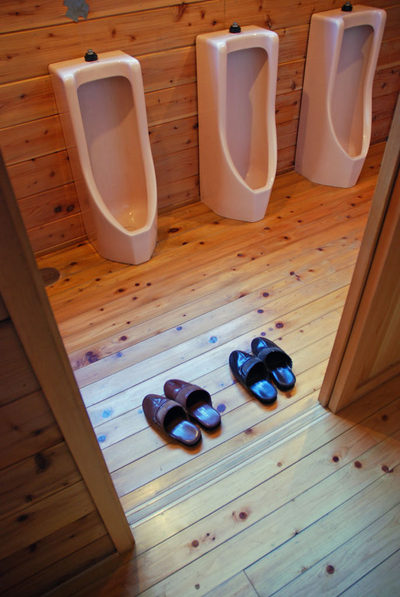 These shoes are specifically for use in the men's toilette. The rest of the building is shoe-free.
I suspect these different meanings account for many other manifestations, such as the use of chopsticks, instead of knife and fork (seem as "weapons of aggression"). And Feng Shui, obviously, could only have been invented in Asia (in China, more specifically).
Tuesday, December 19, 2006
the meaning of home
I've been interested in texts about 'home' recently (part of a broader interest in memoirs and migration), and came across this interesting quote by Genevieve Bell, anthropologist and Director of User Experience at Intel, in Fast Company's latest issue:
"...We have slow-moving cultural paradigms, and 'home' means something in our imaginations. In England and America, you say, 'My home is my castle.' In India, people talk metaphorically about their homes as 'pure' and the outside world as 'polluted.' In Indonesia, home means grace, modesty, and simplicity."
Reference:
Deutchman, Alan. Fast Talk: Home Improvement. Intel's Genevieve Bell on why our homes will never be like George Jetson's. Fast Company. December 2006/January 2007.
Tuesday, December 05, 2006
cell phone, mobile, or keitai?
Mobile culture is one of the topics I'm most interested in nowadays.
Recently, I came across Mimi Ito's blog (I believe it was via Jan Chipchase's blog, but I'm not sure, just way too many feeds). She has edited the book "Personal, Portable, Pedestrian: Mobile Phones in Japanese Life", about the meaning of the mobile (cell) phones in Japan, from where the excerpt below was taken:
"In contrast to the cellular phone of the United States (defined by technical infrastructure), and the mobile of the United Kingdom (defined by the untethering from fixed location), the Japanese term keitai (roughly translated, ‘‘something you carry with you’’) references a somewhat different set of dimensions. A keitai is not so much about a new technical capability or freedom of motion but about a snug and intimate technosocial tethering, a personal device supporting communications that are a constant, lightweight, and mundane presence in everyday life."
I just thought it was striking that the Japanese have actually chosen a Japanese word to define their mobile handset. They have one of the most permeable cultures, at least when it comes to naming new objects and habits, happily adopting the English name, or a modified form of the English version (sarariman for "salary man", pasucom for "personal computer", chiketto for ticket, and so on).
But keitai, or "something you carry with you", really brings the mobile (or cell phone) to a higher level of intimacy and presence. It practically becomes an extension of the body, which might help explain the ubiquitous, almost symbiotic relationship the Japanese have with their mobile phones.
Monday, December 04, 2006
quarter pounder, r.i.p.
 It happened to me some time ago. I was in a sort of a rush and had to grab something fast to eat. I went to a McDonald's and ordered a Quarter Pounder and a Diet Coke (the Diet just to ease my guilt). The lady taking my order looked blankly at me and replied: We're not serving Quarter Pounder anymore.
It took some time to sink in. I couldn't hide my surprise.
I'm sorry, what do you mean, is it temporary?
No, the lady replied again, the Quarter Pounder was discontinued.
I couldn't believe it.
You're saying you have discontinued one of your most iconic products? The Quarter Pounder, the "Quarteirao" as the Brazilians say it, or the "Royale with Cheese", star of one of the most memorable dialogues in cinema's history (in my book), and you have discontinued it? (I didn't say all this, but that's what crossed my mind).
The Quarter Pounder fell victim to the new, healthier McDonald's (in Singapore at least).
As culture changes, products and brands will change as well. Some new ones will be launched while others will be "discontinued". They have a Grilled Chicken Foldover now (by the way, what do they call it in Paris?).
Frustrated, I ordered a Double Cheeseburger instead, just to satisfy my crave.
Quarter Pounder, R.I.P..
Thursday, November 30, 2006
where do ideas come from?
As the end of the year draws near, it's now time to join your co-workers for company parties. Some will risk going to a karaoke (we've all been there, haven't we?).
And it occurred to me that the karaoke is nothing more than a modern version of the old Max Fleischer cartoons with the "famous bouncing ball", which invited us to sing along. I used to watch these cartoons as a kid, and remember sitting in front of the TV absolutely enthralled by that bouncing ball. Here's Popeye singing his theme song (here). From Popeye and the bouncing ball, we went to this. Enjoy it (and I bet you'll sing along).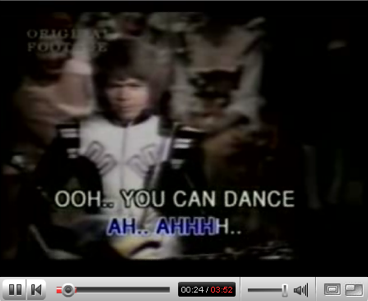
Thursday, November 23, 2006
wedding
Went to a Chinese lunch-wedding last Sunday, the first one we went to in Singapore. Few rituals are more revealing about a particular culture than weddings. It tells a lot about the history and the values of the people, and for a foreigner this is fascinating. So I approached the lunch with curiosity, but I have to confess that I was a bit apprehensive as well, as I had never been to a Chinese wedding before.
As we arrived, the groom warmly greeted us at the entrance, then led us to our table. After a nice, simple ceremony, we were treated to a nine-course Chinese lunch. And if I had any hint of apprehension before, it was totally unjustified, as I'll show you. Let me guide you through the banquet:
1. Lobster salad: small bits of lobster and fruits. Very nice. 2. Braised shark's fin soup with crab meat and golden mushroom (I know, not environmentally friendly, and I wouldn't order it myself at a restaurant, but I was told this is a must-have dish at Chinese weddings. It's very expensive, and it's delicious).
 3. Stir-fried scallops and twin mushrooms with asparagus. Very good as well, the scallops were tender and the asparagus were nicely done (crispy and with a subtle earthy flavor).
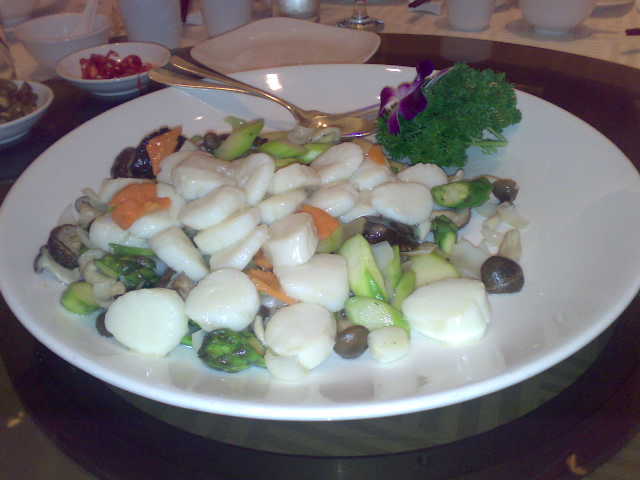 4. Steamed "live" prawns. They are not actually alive when they reach the table (but they were when they were thrown into the steaming pot)
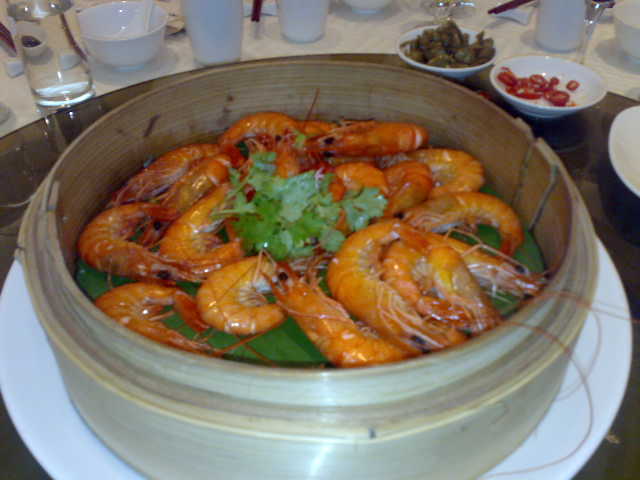 5. Braised baby abalone with fish maw in oyster sauce. My least favorite dish, a little too chewy for my taste.
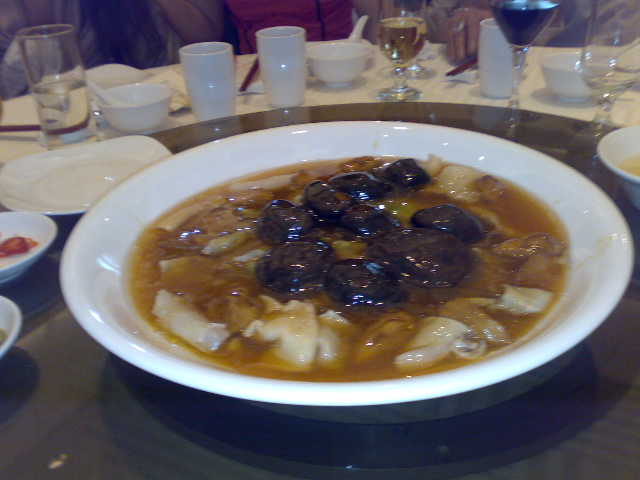 6. Steamed "live" garoupa in Hong Kong style. Same thing as the prawns. That's what you call a fresh fish. Tastes very good.
 7. Braised duck with lotus seed and sea cucumber (are you still with me?). The duck was juicy and tender, but the sea cucumber is not really my thing (it's not bad, but it has the taste and consistency of "water jelly").
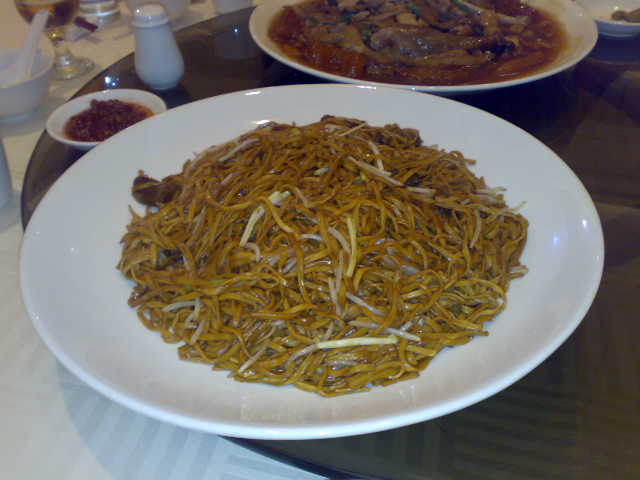
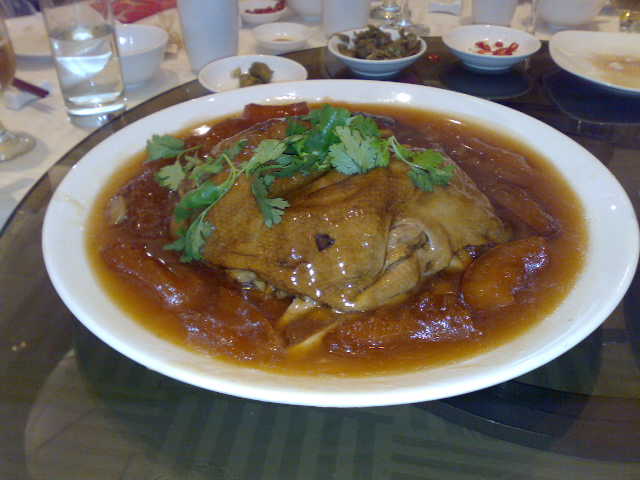 8. Braised Ee-Fu noodle. Noodles with mushroom and bean sprouts. This is really good. I used to have this at Crystal Jade, a local Chinese restaurant chain.
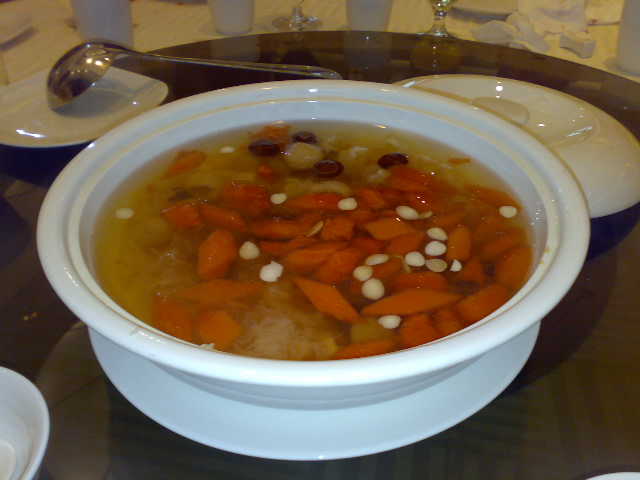
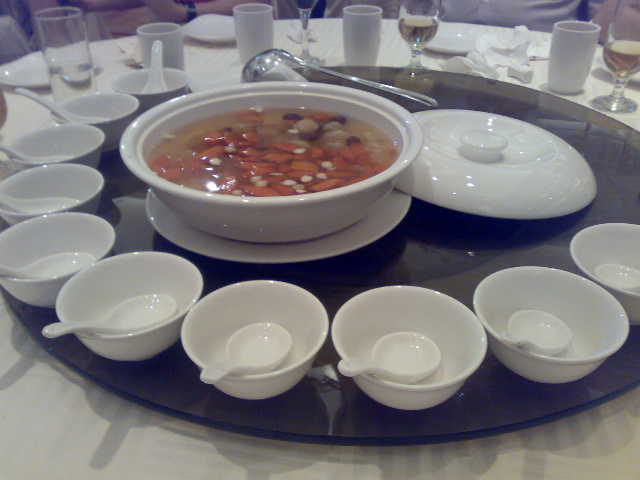
 9. Double-boiled snow fungus with papaya. The dessert. It's more like a hot, sweet soup, with some pieces of papaya.
 I didn't eat all these dishes by myself, in case you're wondering. The waiter would bring the dishes in a big bowl or plate and then would serve us in individual bowls like these below.
 The best was yet to come however (or so we thought). Ever since we'd entered the saloon, we had had our eyes on this beautiful layered cake.
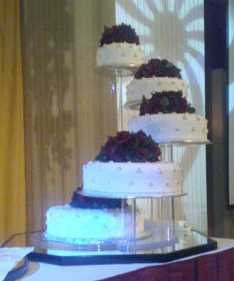 I was a little puzzled however, when I noticed people leaving the party after the dessert. To our surprise, our Singaporean friends who were with us at the table, told us that the cake was just a mock-up, it wasn't a real cake, it was just for the photo, something common at Chinese weddings here.
This is the wonderful thing about culture. When you think you have learned the codes, assimilated all the subtleties of the unwritten rules, something like this catches you totally by surprise. There's always something new to learn. "Just for the photo"..., very interesting.
We were a little bit disappointed, but at the same time I felt relieved there was nothing else to eat. Needless to say, we could barely walk after this gastronomic experience. The bride and groom were very kind in inviting us for their wedding. I left with my stomach full and with a sense of gratitude for their generosity in sharing their culture with us.
Monday, November 13, 2006
strolling in pyjamas
There was an interesting piece on yesterday's Sunday Times (subscribers only, but you can read the same story here).
It was about the controversy revolving around an old habit that some Shanghainese people have of wearing pyjamas in public. Shanghai is arguably China's most modern city and yet it's still common to see residents wearing pyjamas in public during daytime. According to the report "they cruise by on bicycles. They sip tea in quiet teahouses in the park". A recent survey conducted by the Shanghai Academy of Social Science "found out that about 16% of respondents said they or family members often wear pyjamas in public. It is also considered one of the most irritating features of Shanghai city life."
I suppose it's really strange to bump into somebody wearing pyjamas during the day in public, but if you think about it, it makes a whole lot of sense. Although Shanghai is riding an incredible modernization boom, there are still many residents who live in old homes and share public bathrooms, so it's just practical to go out in pyjamas when nature calls. Well, from the bathroom to the coffee shop down the corner is just a short stroll, and so out they go, clad in their pyjamas. For some, it can be seen as a sign of bad taste, a fashion faux-pax, or simply laziness, and for people who live there it must not be nice to witness the daily display of the not-so-latest pyjama fashion.
But, I think this peculiarity is one of the things that makes Shanghai an interesting place to visit, this is just the type of thing that adds colour to the city. The contrast between the super-modern architecture and the pyjama-wearing crowd. Without them, Shanghai will be just another modern city, full of mega-malls and properly attired people. And someday, we'll fondly remember the days we could bump into a guy dressed like this (thanks to preciouspirate).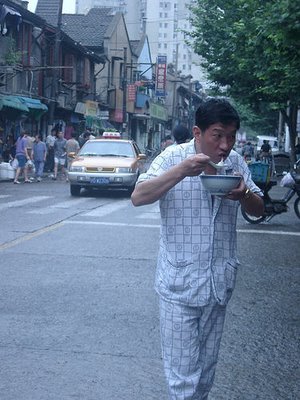
Reference:
Morgan, Benjamin. Pyjama Party. The Sunday Times. November 12, 2006.
 Subscribe to this blog's feed

