When it comes to army enlistment, some have it much easier than others. Take Brazilians, for instance. Sure, we're all required to enlist, but the percentage of people who actually serve the full year is very low. Most people are dismissed without ever putting on a pair of boots. You can be dismissed for a myriad of reasons, e.g. simply because you are shortsighted.
Compared to that, some countries in Asia seem much more strict.
Despite the economic growth, regional instabilities and some demographic trends translate to a more rigorous recruitment system.
First, they're faced with regional uncertainties, such as North Korea, the Taiwan Strait issue, and the lingering Sino-Japanese tension over WWII atrocities.
Second, some countries face a shortage of able-bodied men. Singapore, for instance, has a total population of only 4.5 million (of which about half is male). South Korea is bigger, with a population of 49 million, but they also have a much bigger worry across their North border. What makes matters worse for young men in these countries is that both countries present declining birth rates.
These factors force Singapore and South Korea to extend their military service to a 2-year compulsory program. No excuses. In Singapore, even if you're heading to college you have to postpone it for when you finish the National Service, as it is called here.
But you can't keep young men out of the workforce much longer than that. That's too damaging to their careers and to the countries' economies as well.
Faced with this tricky situation, the South Korean government has just announced that starting next year, married soldiers will be allowed to sleep at home, instead of at the barracks as they currently do. The order is clear: protect the nation during the day, make babies at night. (via iol)
Thursday, June 21, 2007
soldiers, go make babies!

Friday, November 17, 2006
tiger brands
This might be something most people take for granted here in Asia but which strikes my foreign eyes. I see Tiger brands and Tiger-named companies everywhere. I've been collecting a few examples recently. See below:
Singapore's Tiger Beer.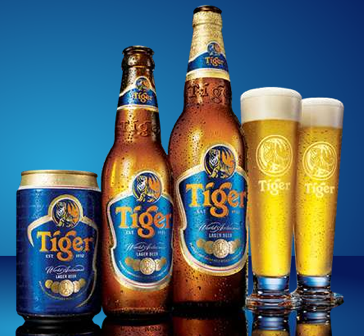 Japan's Onitsuka Tiger

Singapore's Tiger Balm Asian Tigers K.C. Dat, a moving company

Tiger Air, a budget carrier
Japan's Tiger Appliances, a rice cooker maker China's Tiger Generator
 China's Guangzhou Tiger Head Battery
 China's Hang Zhou Tiger, maker of Tiger One Lamps

Korea's LG Tiger One External Laptop Batteries Japan's Hanshin Tigers
 And so goes the list. I'm sure I'm missing some brands here.
There's a simple reason for this profusion of Tiger brands throughout Asia. There are no lions here. Tigers therefore are the kings of animals. They've been part of Asian mythology for ages. There are countless tiger stories in most Asian countries, China, Korea, Vietnam, India, Japan.
The most important of all, of course, is the Chinese zodiac, the Tiger being one of the 12 animals that comprise the zodiac. A Tiger person is seen as a born leader. Famous Tigers include Queen Elizabeth II, Karl Marx, and Richard Branson. Apart from the zodiac there are several other tiger tales. In China's countryside, it's still common today for babies to wear these tiger shoes, with the belief that they'll help protect the babies from evil spirits. In Korea, there's a number of tiger inspired tales. And these tiger paintings are pretty common to spot hanging on the walls in Chinese and in Japanese residences.
 Taking into consideration this background, it's clear to see that these Tiger brands are trying to tap into this rich cultural pot. Whether they are doing this intentionally or not is another question. But what strikes me most is that despite sharing the same name, they apparently are able to create different meanings for themselves. Tiger Beer, for example, is positioned as a cosmopolitan and cool beer brand, whereas nothing could be more traditional and local than Tiger Balm, a pain relieving ointment with an intense (some would say awful) menthol smell.
This profusion of brands sharing the same name, as far as I remember, is not very common in the West.
But I found out that Tiger brands are not exclusively an Asia thing. While they don't exist in the same number as in Asia, there are quite a few examples. Let's take a look at some other Tiger brands around the world:
Detroit Tigers baseball team in the US. Apple's Tiger Operating System.
 There's also a big food company called Tiger Brands in South Africa, and a pipe company called Tigre (Tiger in Portuguese) in Brazil.
And of course, there's Tony the Tiger. While not properly a brand, it's such a strong icon that it almost eclipses the Kellogg's brand. And finally there's Tiger (as in "Woods"), who, being half-Asian, could very well have entered the Asian tally as well.
 Tiger Woods is well on his way to become the first sportsman to reach US$ 1 billion in earnings, which I believe easily put him among the top 3 most valuable brands in the above list. This Woods phenomenon will inevitably spur the creation of a new wave of Tiger brands, and probably will add another layer of meanings to the noun "tiger" as well. Speaking of that there's already speculation that "Tiger" is going to be one of the most popular baby names in the next decades. Can you imagine it? A new generation full of baby Tigers? Now, that would be something interesting to witness. Let's wait and see.
Thursday, November 16, 2006
conspicuous consumption in north korea
(No comments. The news speaks for itself.)
In line with the UN sanctions imposed on North Korea in the wake of Pyongyang's nuclear test last month, Japan has announced the ban on luxury exports to that country.
According to the Japan Times, "the 24 items include beef, tuna meat, caviar and its substitutes, liquor, cars, motorcycles, motorboats, yachts, watches, cameras, audio and video devices, movie and music software, jewelry, carpets and tobacco. Kim (Jong Il) is believed to favor such items for his personal use as well as to give away as rewards for loyalty among Pyongyang's power elite, government officials said. We have (chosen) goods that are likely to be used by (government and party) executives, and those they are likely to give to their subordinates, Chief Cabinet Secretary Yasuhisa Shiozaki told a news conference."
Reference:
Yoshida, Reiji. Banned goods to North listed. The Japan Times. November 15, 2006. (here)
 Subscribe to this blog's feed
