Wednesday, October 25, 2006

singapore airlines' new seats

Singapore Airlines has unveiled its new seats arrangements for long-haul flights between Singapore and some European cities (initially for flights to Paris and Switzerland and progressively to other destinations).
This is the business class seat. It's huge, at least 30 inches wide (the first-class seat is even wider at 35 inches)! And every seat comes with its own 15.4-inch widescreen LCD. Unfortunately, the company says that this upgrade will probably come at a cost, about 10 to 20% more. For the rest of us who have to travel coach most of the times, at least we can resort to Wired's tips on "how to capture the armrest".

Tuesday, October 24, 2006

madman - where do ideas come from?

I have a thing about shoes, sports shoes that is. Not as Carrie and her Manolos, mine is more of a cultural interest, if you will (or at least that's how I keep fooling myself). I bought this book a while ago, and I found in it this wonderful example of "where do ideas come from". This is Nike's Air Barkley Max. Well, Charles Barkley, besides being one of NBA's greatest characters, was also known as a very rough player, and some called him the Madman. So Nike designers came up with this shoe, full of straps. They went for what they called "a psychiatric ward look, a reinforced, metal-bracked lace locking-system". The inspiration? A straitjacket. Brilliant!

sign of apocalypse

Bully, a new video-game released by Rockstar Games.

PS: The school's motto, "Canis Canem Edit", apparently, is Latin for "Dog Eat Dog".

Monday, October 23, 2006

vuja de

One of the interesting things about blogging is that it is a good way to keep track of notes and ideas and to start making connections between them. After some time, you start to notice that one post leads to another, about something related you've seen somewhere else (and sometimes you're rewarded with nice little surprises). While writing the posts about noticing, here and here, they remind me that I had read this post in Tom Kelley's FC blog some time ago. As he said, everybody knows what "déjà vu" means, right? It is that strange feeling that you have seen something before. Well, when going out to do field work, in "anthropologist" mode, so to speak, you should aspire to the opposite, you should go with the state of mind of "vuja de". "Vuja de" is "the distinct sense that, somehow, something that just happened has never happened before". It is about seeing the world with fresh eyes. What a great term! Vuja de...it stayed in my mind.
Well, I googled "vuja de" to find out who had originally coined it. The answer? George Carlin (hah, who else?). The guy is genius.

Sunday, October 22, 2006

modern man

Comedians have an uncanny talent to capture the zeitgeist. I guess they were gifted with a few extra drops of "noticing" genes. Of course, one has to have talent to communicate that as well, but it all starts with noticing. George Carlin's Modern Man is the perfect example.

Friday, October 20, 2006

beautiful awkward pictures

Toni Collette, one of my favourite actresses, is launching her first album, "Beautiful Awkward Pictures". I still have to listen to the whole CD but I already liked the title song and “Vitamin Pills”, both beautifully crafted, melancholic and poetic. They sound just as the quirky, dysfunctional characters she usually plays on the big screen. Sweetly painful.

Thursday, October 19, 2006

fuwa - where do ideas come from?

Beijing Olympics' mascots have been officially renamed "Fuwa". Get used to that name. With some 650 days for the Games' opening, we're all going to hear a lot about them in the coming months. Like many things in China, there are many symbolic meanings associated with this name. There are five Fuwa, a reference to the five Olympic rings, and they were (I quote from the Games' Official Website) "designed to express the playful qualities of five little children who form an intimate circle of friends... they also embody the natural characteristics of four of China's most popular animals - the Fish, the Panda, the Tibetan Antelope, the Swallow - and the Olympic Flame. Each of Fuwa has a rhyming two-syllable name - a traditional way of expressing affection for children in China. Beibei is the Fish, Jingjing is the Panda, Huanhuan is the Olympic Flame, Yingying is the Tibetan Antelope and Nini is the Swallow. When you put their names together - Bei Jing Huan Ying Ni - they say 'Welcome to Beijing' ...In their origins and their headpieces, you can see the five elements of nature - the sea, forest, fire, earth and sky...".
Very well then. I don't know why though (maybe it's just me), but don't they look like the Teletubbies?

noticing

Grant McCracken's post about "noticing" is a great one. For those (few) who don't know him, Grant is an anthropologist, author, blogger, marketing consultant, and one of the first people I read who wrote about culture and marketing in the same sentence. I was heavily influenced by his "Culture and Consumption" book, and his "Meaning Transfer Model" is a seminal reading for anyone working with "meaning management" (most of us).
I guess his post goes along the same line as this, the need to be able to notice things that most people take for granted. And one of the things that makes it easier for people to notice is the increasing usage of camera-phones. Granted (no pun intended), you need to have the "eye" first, or rather, the frame of mind, to do it, but camera-phones have made incredibly easy for people to record their "noticing" and share it with somebody else (through blogging and flickr). One of the people who made a comment on Grant's post, Steve Portigal, for example, has this great project for his design students at CCA. Like most of the things in life, noticing is a matter of disposition and practice.

Tuesday, October 17, 2006

where do ideas come from?

I came across this neat web application to share presentations (via Infectious Greed). It works pretty much like YouTube, you can upload your presentation and share it with everybody who access the site, or you can embed it on your own web site, which I'm doing here. I took an old presentation I did about E.T., the movie. See below. I think it's another good example of "where do ideas come from". This has the potential to become an interesting series. PS: the only thing is it changed the italics in the title to that weird font.

Monday, October 16, 2006

balseros

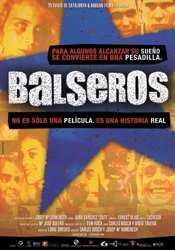
Writing this post, it reminded me of this other documentary called "Balseros" (Rafters) that I watched quite some time ago on HBO. Like "Chinese Restaurants", it's also a story about migration, this one of seven Cubans trying to escape the Castro regime in improvised homemade "balsas" (rafts), hence the title. The documentary follows the seven refugees as they prepare their rafts a few days before facing their journey, an uncertain attempt at crossing the shark-infested Florida Strait on their way to reaching the Florida coast. We witness all the drama, the painful farewell from their loved ones, the promises of reunion some time in the future. Then the documentary actually takes us 7 years in the future, and we catch the seven refugees living in the US. It's riveting to be able to witness what happened to their lives (spoiler warning!). There are the ones who never saw their relatives again and there are the ones who were able to reunite with their loved ones. Some proudly show their new American citizenship as well as their newly acquired possessions. Some others bitterly complain about their crushed dreams. It's all very intimate and as you get to know them, it’s hard not to share their joys and disappointments. This sure beats Reality TV. This is real drama. As the producers write, "theirs is a true story about some of the authentic survivors of our times, the human adventure of people who are shipwrecked between two worlds."
These two documentaries, “Chinese Restaurants” and “Balseros”, brings to life the human drama that takes places when somebody moves to another country, mostly when it's the only solution to escape poverty, but to a lesser extent I think it could apply to any migrant. According to the most recent UN report there are 190 million international migrants in the world. Migration has been one of the hot topics for governments all over the world and will continue to be in the coming decades. Even in the US, a country largely built and formed by immigrants, this is a contentious issue to this day. As the population of some of the world's most developed countries decline, governments are being forced to act upon. Some measures are more successful than others (limiting access to birth control, cash bonuses to couples bearing more than one child) but they all seem just palliative measures against a stronger tide. Ultimately, governments will have to allow some form of immigration. Countries such as Russia, Japan, and Singapore, are already debating these issues. But this is far from simple arithmetic. It raises a lot of questions regarding culture, race, and the population gene. Japan, for example, has one of the most racially uniform populations in the world. How will they deal with an influx of different gene pool? How will any country, for that matter, manage the increasing usage of "foreign" languages (such as Spanish in the US) and the changes in racial mix? China has another type of problem: a surplus of 23 million men in marriage age over the next 10 years. Where will they find the brides? There are no simple answers. One thing is for certain. There'll be lots of people migrating. Some eventually will find a more comfortable life. But there'll be also lots of people caught in the middle, struggling to come to terms with their own identities and missing their loved ones. Because when you migrate to another country, you might win some, but you always lose something. That's the deal one makes.

References:
Murphy, Kim. 2006. The Vanishing Russians: Part I - A Dying Population. Los Angeles Times. October 8, 2006
Onishi, Norimitsu. 2006. Village writes its epitaph: victim of greying Japan. The New York Times. April 30, 2006.
Poston Jr, Dudley L. and Peter A. Morrison. 2005. China: Bachelor Bomb. The International Herald Tribune. September 14, 2005.
Pressley, Sue Anne, Karin Brulliard and Ernesto Londono. 2006. Marchers flood mall with passion and pride. The Washington Post. April 11, 2006.
Ramesh, S. 2006. Singapore government outlines plans to tackle population problem. Channel NewsAsia. 23 August 2006
UNFPA. 2006. The State of World Population 2006.


Friday, October 13, 2006

little india

Went to "Little India" the other day. They had the streets decorated for the Deepavali Festival. For a moment, I felt as if I had suddenly been transported to some place in India, as the streets were adorned with colorful props, and the street stalls sold all sorts of Hindu artefacts and candies (oh, and Bollywood posters were everywhere). See some pictures.


eve ensler

I first heard about TED from Russell Davies (who else?). To call TED a conference is a gross misrepresentation. TED brings remarkably brilliant people from all fields, thought-leaders such as Jeff Bezos, Al Gore, Bill Gates, Malcom Gladwell, Steven Levitt, Jeffrey Katzemberg, Yo-Yo Ma, Sergey Bryn, Larry Page, and Ze Frank (the "how to dance properly" guy), with the only caveat that they can only talk for 20 minutes. TED has now started to make the presentations available for viewing and downloading. Go there, fast. In the meantime, I'll post links to the ones that struck me the most:
Eve Ensler, the author of "Vagina Monologues", she talks about her play and her crusade to stop violence against women.
Sir Ken Robinson, author and creativity guru on creativity and education.
Hans Rosling, founder of Gapminder, on how to make data more compelling.

Thursday, October 12, 2006

chinese restaurants


No, this is not another gastronomic post. The gastronomic theme here serves only as a background for a greater story, that of the Chinese diaspora. This is a wonderful documentary series directed by Hong Kong born Canadian director Cheuk Kwan. I watched only a couple of episodes on Singapore's Channel News Asia and was deeply moved by the stories, portraits of Chinese families who left their country, fleeing from either Communism or poverty (or both), moving to far away places such as Cuba, Argentina, Israel, Brazil, Norway and Trinidad & Tobago. They are stories of hardship and suffering, but also of survival and adaptation. And although it's predominantly a look at the past, it feels more actual than ever. For human migration, culture clash, and quest for identity seems very much relevant these days. As Mr Kwan asks: “How do you survive in a place where you do not belong?”.

Tuesday, October 10, 2006

underdogs

The deal between Google and YouTube brought attention to Sequoia Capital, the Silicon Valley venture capital firm that was an early investor in YouTube and that reaped a 40-fold return on its US$ 11 million investment in just over 20 months (that's a US$ 400-plus million gain in case you're wondering). This is not their first hit. They have been involved in the development of companies such as Apple, Yahoo, Cisco, Oracle, Google, Electronic Arts, to name a few. They sure know something about managing innovation and creating value. I especially like their profile of people whom they are willing to back. I quote from their website:
Underdogs: The collision of intelligence and ambition with opportunity is unbeatable. Almost everyone we have ever invested in has been a complete unknown at the time we met. Many have been immigrants or first generation Americans with barely a penny to their name. Underdogs are our favorite kind of people.

ramen

I love "ramen", not the pre-packed, microwavable one, but the real thing, made with a rich pork bone broth, with tender pieces of pork meat, an egg, and succulent noodles. I'm not alone. People can get pretty obsessed about ramen. I never heard of a Pizza Museum, and yet there is a Ramen Museum in the city of Yokohama, one testament of the ramen-craze, complete with ramen shops, ramen video-games (?), a replica of an old street in Tokyo with old ramen carts and all ramen paraphernalia you can imagine. And for those movie buffs who can't be satisfied only with Tampopo, there's another "ramen movie" being made, Ramen Girl, starring Brittany Murphy, which is schedule to open in 2007. There are also many "ramen bloggers", such as this and this. Well, here's my small contribution: last time I went to Tokyo, I found Manrikiya (photo above), a small ramen shop in Azabu-juban. They had a funny collection of Japanese figure toys in one corner, and the ramen was simply delicious.
Here's the address:
Manrikiya
Tokyo-to Minato-ku
Azabu-juban 2-3-2
http://www.adhams.co.jp/manrikiya/

google + YouTube

So Google has acquired YouTube in an all-stock transaction worth US$ 1.65 billion (listen to the webcast here). There are lots of interesting bits in this acquisition:
- the incredible quick success of YouTube, a typical garage start-up that in a time span of just 20 months became a social phenomena with 50 million users worldwide.
- the huge payoff for Sequoia Capital, the Silicon Valley venture capital firm that put down US$ 11 million and got a 30% stake in the company, worth now US$ 495 million. Not a bad return for a 20-month investment.
- the fact that it was Google who got the final deal beating the other suitors, Microsoft, Viacom, Fox and Yahoo. It tells something about the dramatic shift in power in the business world.
- the jury is still out though, with all the copyright implications, as Mark Cuban writes in his Maverick blog.
- YouTube. Great choice of name, it says what the service is all about right away. And a refreshing one for that matter, given all the undistinctive "i-something" brands that exist out there. Maybe it was just a coincidence but it's interesting that "YouTube" is exactly the opposite of the "i-something" bunch (You, i, so duh, how didn't I notice it before?), and it's YouTube with a capital initial, not youtube.
- But will that mean we'll be flooded with a bunch of "You-something" brands now?

Reference:
Sorkin, Andrew Ross and Jeremy W. Peters. 2006. Google to acquire Youtube for $1.65 billion. The New York Times. October 9, 2006.

Saturday, October 07, 2006

hazy days

This is a picture taken from Sentosa Island, overlooking Singapore's main island. Not much to say really, just that the air quality has been terrible the last couple of days, as the smoke from the forest fires in Sumatra, couple of hundred miles to the South, reach Singapore. And it smells (a distinct burning smell). Not nice. Longing to see some blue sky soon.

Thursday, October 05, 2006

"fast company" jumped the shark

"Jump the shark" is an expression originally created to identify a moment when a TV show reached its peak, after which everything would be downhill. It refers to an episode of "Happy Days" when Fonzie literally jumps a shark (that must've been something). I'm borrowing that expression to identify a "jump the shark" moment at "Fast Company".
Created in the ’90s to be a voice for the new generation of “free agent” workers, the magazine helped to show a new way of life amid the changing nature of work. Articles such as Alan Webber's "Are You Deciding on Purpose?" (FC 13, Feb/March 1998) showed an alternative, more intelligent, more creative, more intense and personal and yet more balanced and casual way of working and living. People bought in. By issue no. 35, from Aug. 2000, the magazine had swollen to a yellow-pages-like 418 pages! As a magazine junkie myself, I've bought every single issue since January 1998. I devoured the articles about the importance of design, the new working structures, and how creative teams were solving problems in different industries.
But then, the internet bubble burst, and Fast Company, like in a bad case of anorexia, started to get thin. And thin. And by issue no. 92, from March 2005, it had shrunk to 96 pages, less than a quarter of the size from their heydays! But I hadn't given up on the magazine just yet.
Then in late 2005, Fast Company was sold to another publishing company and a new editor, Mark N. Vamos, took over. And then, came the shock.
In his very first "Letter from the editor" (left photo, from the October 2005 issue), Mark N. Vamos, appeared using a bow tie. A bow tie! This was supposed to be the magazine that practically endorsed and validated the "everyday casual day" dress code. And now the editor wears a bow tie? What was he thinking? More recently he’s been sporting a more casual open-collar shirt (right photo, from the September 2006 issue). Somebody must have warned him.
I'm still buying the magazine though. A recent issue brought an interesting article about the emergence of “Aerotropolis”, giant airport-cities, designed to be well-oiled machines to facilitate the flow of people, goods and businesses. That’s fine. I’ll keep buying the magazine as long as it keeps bringing articles such as this (but I'll keep having second thoughts about that bow tie).
It's just a small detail (but then again, maybe it's not).

Reference:
Webber, Alan W. 1998. Are you deciding on purpose? Fast Company. December/January 1998
Lindsay, Greg. 2006. The rise of aerotropolis. Fast Company. July/August 2006

Wednesday, October 04, 2006

missed turn

Something (mildly) funny happened today. I stumbled on this post about Richard Pryor (on Beeker Idea's blog). Then went out for lunch. Caught myself thinking about the post, its argument, its tone, its prose. Lost in my thoughts, missed a turn (it happens to me all the time). Made a U-turn 100m down the road (laughing at myself). Well, that was the (mildly) funny part. The post? It is a wonderful essay on what makes Richard Pryor funny. I wish I could write like that.

Monday, October 02, 2006

where do ideas come from?

While appreciating any creative work, in literature, architecture, music, or even advertising, I'm always drawn into the creative process, even more than into the final work itself. It always fascinates me how people can come up with such wonderful ideas. One of the strategies that I find most interesting is the cross-pollination of ideas, the ability to transfer ideas from seemingly unrelated situations or categories.
I've watched Formula One races for ages, and have watched most ER episodes as well, and yet I could never have thought about this (via LunchoverIP). A team of doctors from a London hospital got in contact with Ferrari to learn more about their pit-stop preparation and team synchronization. And when you come to see it, it seems a pretty obvious comparison. Basically, you have a team of people waiting for somebody (or something) to arrive, both with the pressure of time to solve a problem. It could apply to a team of mechanics in a F-1 box or to a team of doctors in an operating room, and they could perfectly learn from each other. Brilliant!